Beach Mood Board Ideas for Home Decor: Start with Art
When winter is doing the absolute most and the world outside feels gray, I start craving warmth, light, and that calm, coastal feeling. A beach mood board is one of my favorite ways to bring that energy into a space—without guessing, overbuying, or ending up with a room that feels almost right.
If you have ever stared at a wall and thought, “What would actually look good there?”—same. I’m a visual person, and mood boards help me see the room as a whole before committing. In this post, I’m sharing my 5-step beach mood board process so you can create a coastal-inspired space that feels calm, cohesive, and personal.
Short answer?
The easiest way to create a beach mood board is to start with one strong focal piece of coastal art, build a simple color palette from it, then layer in texture, furniture shapes, and a few supporting accents.
What Is a Beach Mood Board?
A mood board is a simple visual plan that brings together colors, textures, decor ideas, and art so you can see how everything works before you start shopping. The best mood boards feel cohesive because they are all telling the same story.
A beach mood board or coastal mood board usually includes ocean-inspired blues, sandy neutrals, weathered textures, natural materials, and a relaxed feeling of openness. The biggest mistake people make is trying to style the whole room at once instead of choosing one anchor and letting the rest of the room support it.
What to include in a beach mood board

- One focal point: usually art, a rug, or a paint color
- A color palette: 3–5 repeating colors
- Texture cues: linen, wood, woven materials, stone, glass
- Furniture silhouettes: the general shapes and feel you want
- Lighting + accents: lamps, baskets, mirrors, greenery, side pieces
My 5-Step Beach Mood Board Process
This is the process I use when I want a room to feel intentional instead of pieced together. It works for a full room, a single wall, or even a small corner that needs help.
- Select your focal point. Choose the piece that will set the tone for the room. I almost always start with art.
- Build a theme. Pick 1–2 words that guide decisions, like calm + comfortable or airy + natural.
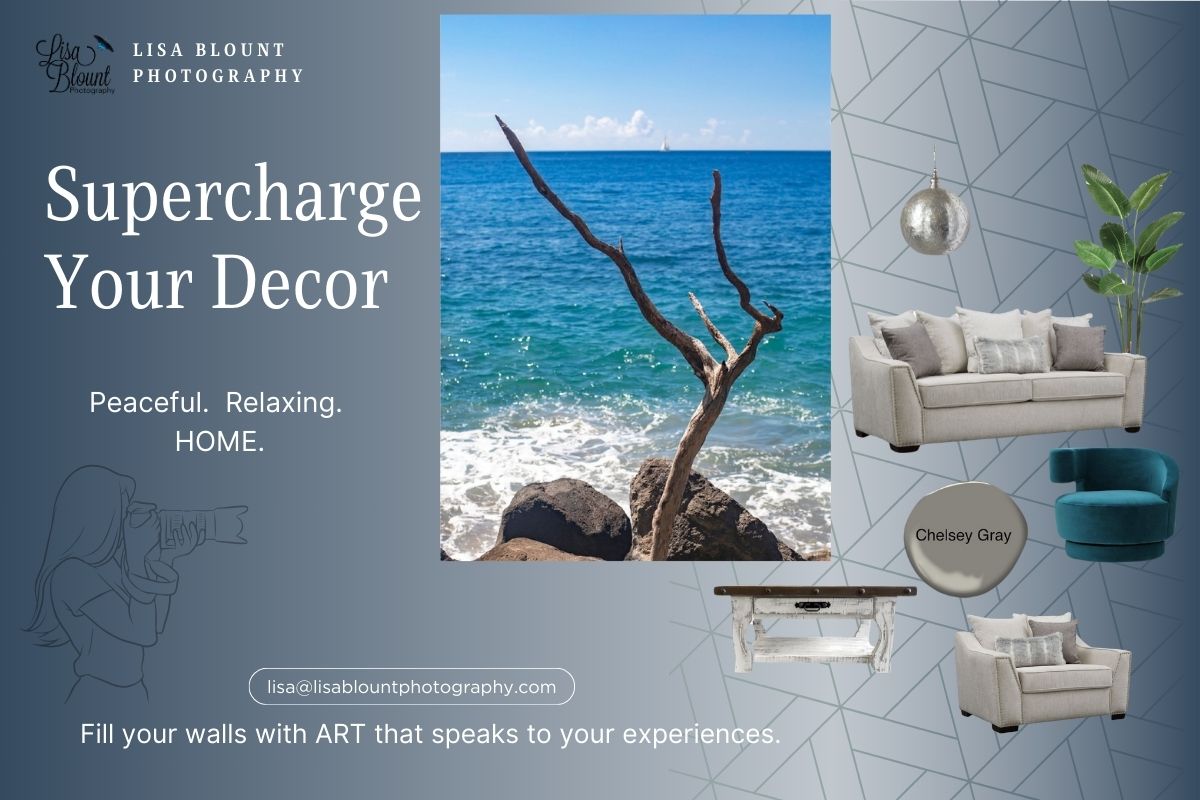
- Create the mood board. Pull together the art, palette, textures, and supporting ideas in one place.
- Tweak until it feels like you. Adjust color, warmth, texture, and balance until the room feels personal.
- Shop with confidence. Once the board works, you stop guessing and start choosing with purpose.
Why Beach Mood Boards Work So Well
Coastal colors—soft blues, teals, sandy neutrals, and weathered textures—create a sense of openness and ease. A beach mood board helps you translate that feeling into a room without turning it into a literal beach house theme.
It is less about shells and signs, and more about atmosphere. The right beach mood board creates a room that feels lighter, softer, and more restorative.
Beach Mood Board Example: Color of Weathered Wood
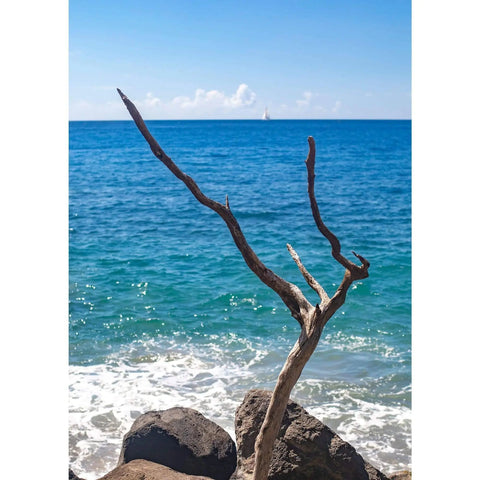
Let’s walk through the process using one of my favorite coastal-inspired pieces: Color of Weathered Wood. The weathered texture, ocean tones, and distant sailboat give it a calm-but-not-boring energy that works beautifully as a starting point.
Step 1: Start with the art
This piece naturally suggests a palette: ocean blue, teal, driftwood, stone, and soft gray. Once the art is chosen, everything else becomes easier because the room already has a visual anchor.
Step 2: Choose the feeling
For this example, the guiding word is comfort. Not perfect. Not formal. Comfortable. I want a room that feels relaxed, welcoming, and easy to live in.
Step 3: Build the board
Pull in 6–10 visuals: the art, a sofa shape, a chair, a rug texture, a lamp, maybe a woven accent or a plant. You are creating a visual story, not shopping every exact item yet.
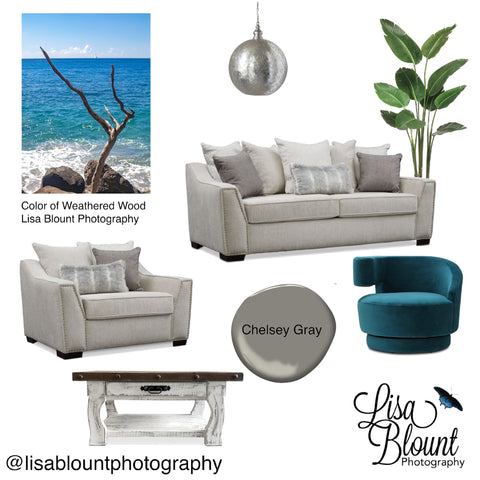
Step 4: Adjust the balance
If the board feels too cool, add warmer wood or sandy neutrals. If it feels too neutral, bring in one deeper coastal tone. The goal is not perfection—it is a room that feels cohesive and welcoming.
Step 5: Start shopping
Once the board feels right, shopping gets easier. You are no longer choosing random pieces—you are choosing items that support the same visual direction.
What Colors Work Best in a Beach Mood Board?
A strong beach mood board usually starts with 3–5 colors you can repeat throughout the room. Good coastal combinations often include:
- sand or ivory
- driftwood gray
- ocean blue
- teal or sea-glass green
- a soft natural neutral for balance
These colors help a room feel open, layered, and restful instead of overly themed.
A Quick Note on Materials
Color of Weathered Wood is available as TruLife Acrylic or glossy metal. TruLife Acrylic feels modern and low-glare with that window-view look. Metal feels slightly brighter and more vibrant. Both are gallery-quality, so the right choice depends on your lighting, your room, and how polished you want the finish to feel.
No Empty Wall? Try an Acrylic Block
If you love the idea of a coastal mood but do not have an open wall, an acrylic block is an easy way to bring in that same feeling on a shelf, desk, nightstand, or mantel.
|
Acrylic blocks are a great way to collect coastal art even when walls are full. They are especially useful for bookshelves, home offices, and layered styling moments where you want a small pop of calm without committing to a large wall piece. |
 |
FAQ: Beach Mood Boards
How do I make a beach mood board look elevated and not kitschy?
Skip the obvious theme decor and focus on color, texture, and one strong focal piece. Coastal rooms usually feel more elevated when they rely on ocean tones, weathered neutrals, natural materials, and art rather than novelty accents.
What colors work best for a beach mood board?
Sand, ivory, driftwood gray, ocean blue, teal, and soft green are strong starting points. Keep the palette simple and repeat it in small ways throughout the room.
Can I create a beach mood board without making my house look like a beach house?
Yes. Think “coastal calm” instead of “beach theme.” The goal is atmosphere, not themed decor.

Lisa Blount, Fine Art Photographer
Lisa Blount creates nature-inspired fine art photography designed to help rooms feel calmer, more personal, and more visually connected. Through coastal imagery, mood boards, and art-first styling, she helps homeowners shape spaces that feel collected, relaxed, and meaningful.
(Furniture and decor links are included for visual inspiration only. I am not affiliated with or promoting these brands.)